What are platinum-group metals used for?
Mostly for cleaning exhaust. The six platinum-group metals — platinum, palladium, rhodium, iridium, ruthenium and osmium — are catalysts first: in 2025 cars took 8.2 million of the 10.1 million ounces of palladium the world used (81%), 3.3 of 8.0 million ounces of platinum and 0.9 of 1.06 million ounces of rhodium (Johnson Matthey), because a three-way catalytic converter is a honeycomb coated with all three. Platinum's other lives are jewellery (1.5 million ounces, with a Chinese surge in 2025), the platinum-rhodium gauzes that make nitric acid for fertiliser and explosives, the bushings that spin glass fibre, petroleum reforming catalysts, hard disks (ruthenium), multilayer ceramic capacitors (palladium), dental alloys, pacemakers and cancer drugs, and the anodes of PEM hydrogen electrolysers, which need iridium. Investment — bars, coins and ETFs — swung from 1.15 million ounces of platinum buying in 2025 to net selling in 2026.
Which countries produce the most platinum and palladium?
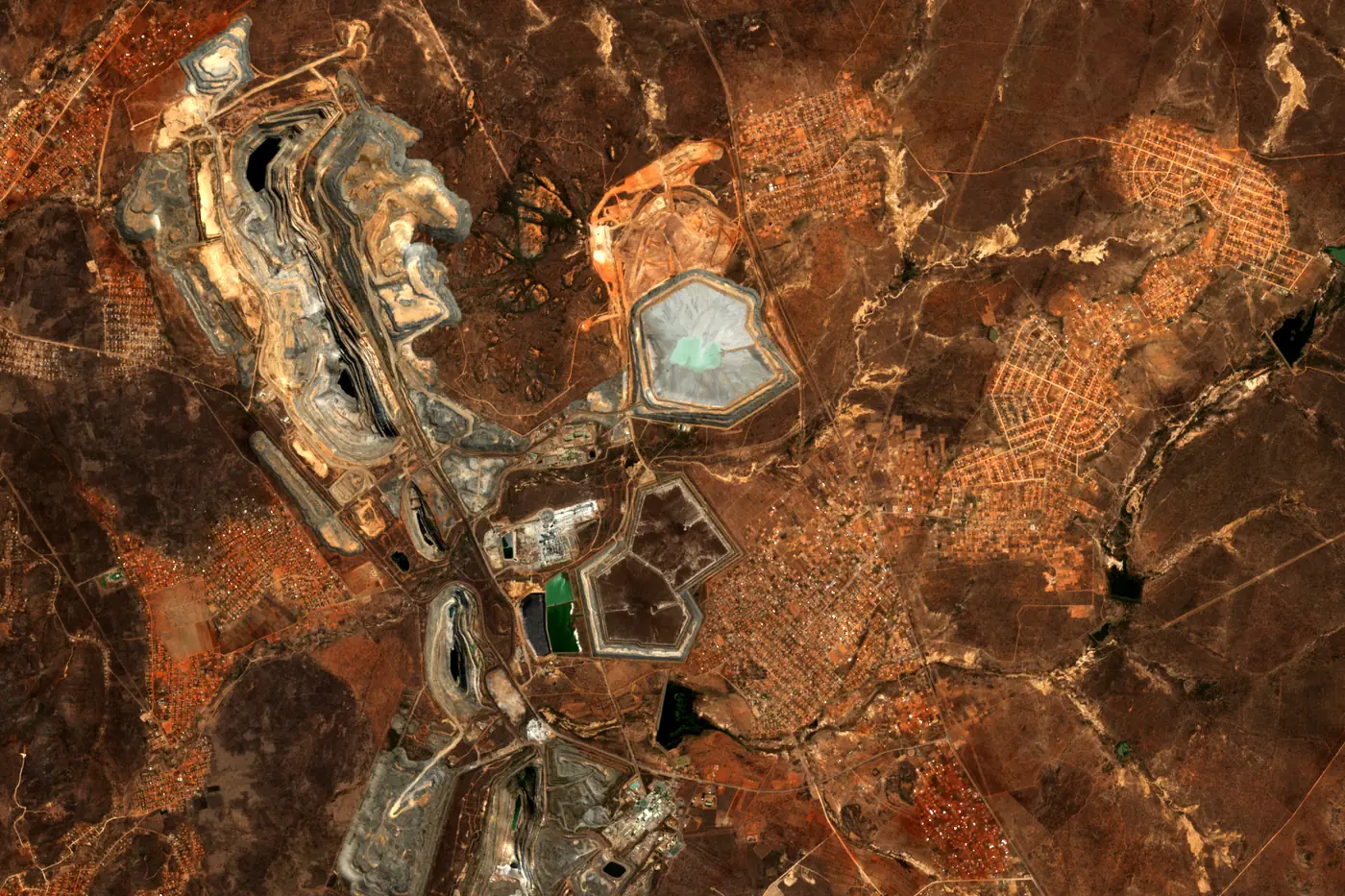
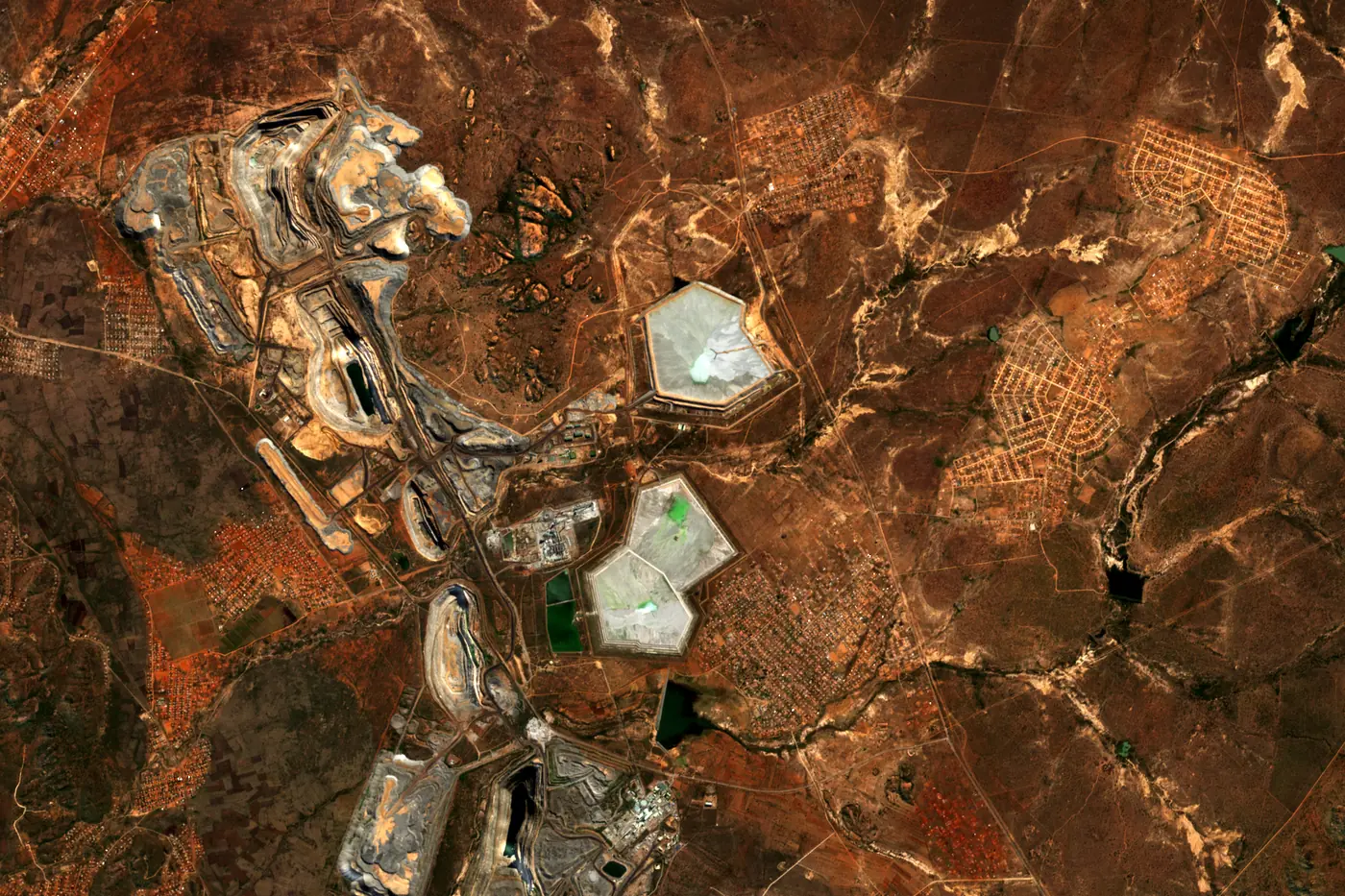
Two countries mine four-fifths of both. South Africa's Bushveld Complex produced about 120 of the world's 170 tonnes of platinum in 2025 (71%) and 70 of 190 tonnes of palladium (37%), and holds roughly 63,000 of the world's 76,000 tonnes of reserves (83%, USGS). Russia's Norilsk nickel-copper ores yielded 84 tonnes of palladium (44% of the world) and 20 of platinum (12%); Zimbabwe's Great Dyke 18 tonnes of platinum and 15 of palladium; Canada's Sudbury and Lac des Iles 5 and 16; the United States' Stillwater 1.8 and 6.2. Rhodium is even more concentrated — South Africa supplied 566 of the 701 thousand ounces mined in 2025 (81%, Johnson Matthey). Recycling adds about 140 tonnes of platinum and palladium a year from scrapped catalysts and jewellery. The ranking has barely moved in a decade: BGS puts South Africa at 57% and Russia at 24% of all PGMs mined in 2024.
Why did platinum hit a record in January 2026 and then fall 44%?
Because a real deficit met a speculative wave. Platinum averaged about $1,200 an ounce in 2025 (up 25%) as the market ran a 1.44 million-ounce shortfall — mine supply flat at 5.6 million ounces, South African output down 9%, Chinese jewellery fabrication up 56% as gold became unaffordable, and 1.15 million ounces of investment demand — and above-ground stocks fell to 1.7 million ounces, about ten weeks of demand (WPIC). When the Guangzhou Futures Exchange launched platinum and palladium contracts on 27 November 2025, Chinese retail money piled in: NYMEX platinum hit $2,925 on 26 January 2026. Then the physical signals reversed — ETF holders sold more than 500,000 ounces in the first half, Chinese jewellery demand fell 55%, lease rates collapsed from above 10% to about 2% — and WPIC now expects a 265,000-ounce surplus for 2026. Platinum was $1,649 on 20 October 2026, 44% below the record but still well above its 2019–2024 range of $870–1,090.
Is Russian palladium sanctioned?
Not directly, which is the point. Nornickel, which mines 44% of the world's palladium, is not on US, UK or EU sanctions lists — the LME confirmed in July 2026 that it would not ban the company's metal — although its largest shareholder, Vladimir Potanin, is. What changed after 2022 was the plumbing: the London Platinum and Palladium Market withdrew Good Delivery status from Russia's refineries, the UK put a 35% tariff on Russian platinum and palladium, Germany, Japan, Korea and the UK cut purchases, and virtually all Russian platinum now flows to China through Hong Kong. The United States tried to go further: a petition by Sibanye-Stillwater and the United Steelworkers in July 2025 stopped imports of Russian palladium, and the Commerce Department set preliminary anti-dumping and countervailing duties of 132.83% and 109.1% in early 2026 — but on 29 May 2026 the International Trade Commission found that the US industry was not materially injured, so no duty orders exist; Sibanye appealed to the Court of International Trade on 16 July 2026. Nornickel's output is falling anyway: its 2026 guidance of 2.4 million ounces of palladium is the lowest in about twenty years.
Will electric vehicles kill demand for platinum-group metals?
Slowly, and not all of it. Battery-electric cars have no exhaust and no catalyst; EV sales passed 20 million in 2025, a quarter of the market and more than half in China (IEA), and global petrol-car output has been flat at its 2023 peak. Automotive PGM demand fell 1.4% in 2025 and WPIC expects automotive platinum down 4% in 2026 — a decline, not a collapse, because hybrids need a full catalyst and run it harder, the EU has proposed replacing its 2035 combustion ban with a 90% CO₂ target that would keep plug-in hybrids on the road, and the US fleet is shifting to larger vehicles. Palladium, 81% automotive, is the exposed metal: Johnson Matthey forecasts its first surplus in 2026 after deficits in every year from 2012 to 2025, and recycled palladium from scrapped cars will reach a four-year high. Platinum's hedges are elsewhere — glass fibre for AI circuit boards (+23% in 2026), nitric acid, jewellery and the hydrogen economy, where PEM electrolysers would need about 30% of annual iridium output to reach net-zero scale.
Why do governments and militaries care about platinum-group metals?
Because a jet engine, a nitric-acid plant and a hydrogen fuel cell all stop without them, and 80% of the supply comes from two countries, one of them at war. Platinum-aluminide coatings protect turbine blades, platinum-rhodium gauzes make the nitric acid behind every explosive and most fertiliser, ruthenium coats the hard disks in data centres, palladium sits in the capacitors of every circuit board and iridium in crucibles and electrolysers. All five traded PGMs are on the final 2025 US Critical Minerals List and are strategic raw materials under the EU Critical Raw Materials Act, whose 2030 benchmarks cap any single supplier at 65% — a target Russia already breaches for palladium. The United States imports 89% of its platinum and 57% of its palladium, has one producer, in Montana, that idled its Stillwater West mine in 2024 and lost a five-week strike in 2026, and holds 8,380 ounces of platinum and 489 of iridium in the National Defense Stockpile and no palladium. The January 2026 Section 232 proclamation chose negotiated price floors over tariffs; the Pentagon's 2025 stockpile buying went to cobalt, antimony and tantalum instead.
Need a deep-dive report on platinum-group metals?
That's exactly what we do. We produce commissioned deep-dive reports for the PGM chain — miners, smelters and refiners, automakers and catalyst makers, glass, chemical, electronics and hydrogen manufacturers, recyclers, bullion and ETF providers, metals traders — and for geopolitics researchers and think tanks, covering angles such as mine-to-catalyst supply-chain mapping, South African and Russian supply scenarios, sanctions and trade-measure exposure, powertrain and substitution modelling, hydrogen and iridium demand, recycling economics, stockpile rules and price scenarios. Every report is source-cited — charts, maps and citations included — and built on the same open, verified data behind this dashboard. Email hello@mineral.watch with a short note on what you need and we'll come back with a scoped proposal.