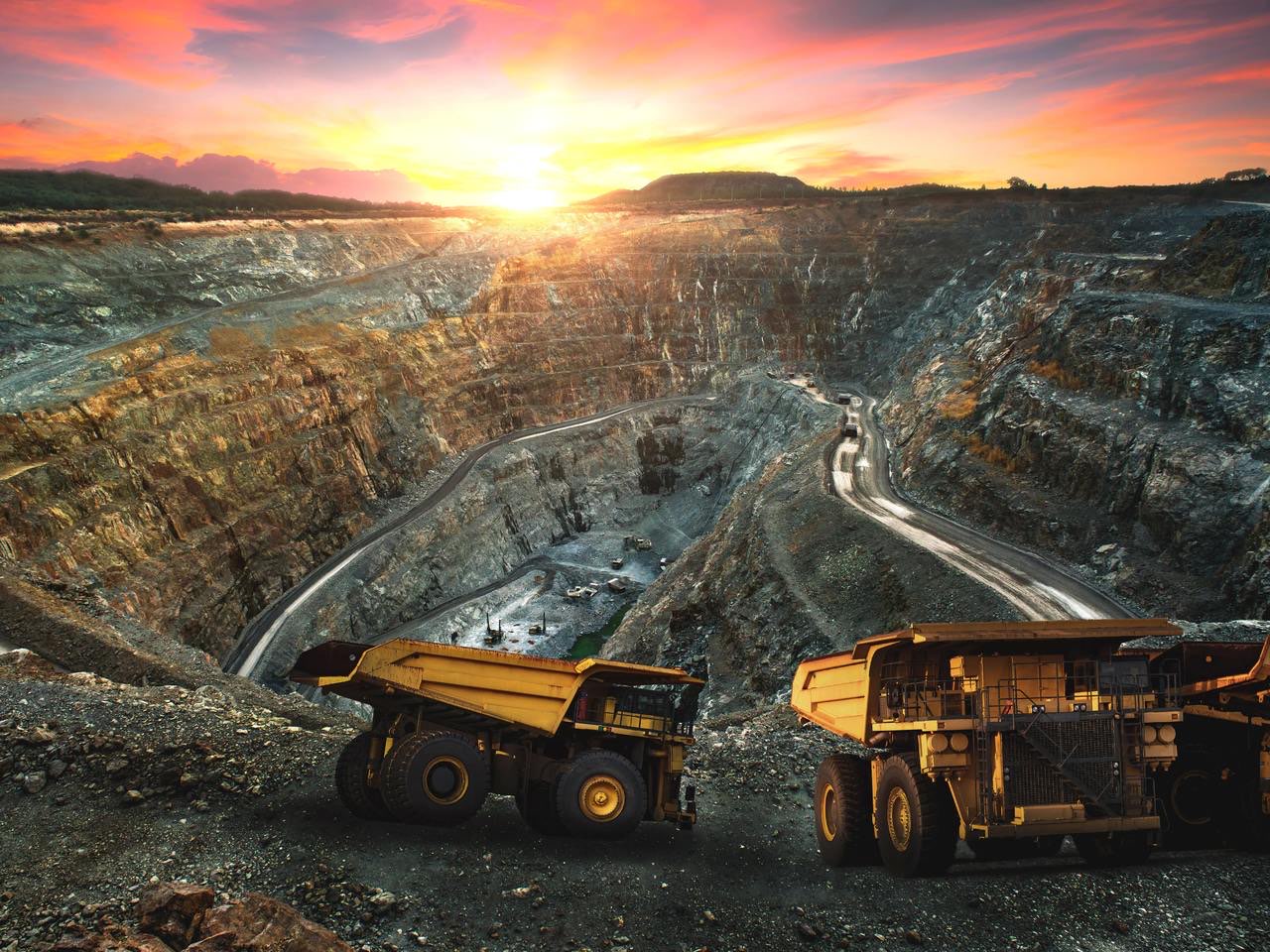
Graphite is the single largest material in a lithium-ion battery — roughly 50 kg per EV. This site tracks where it is mined, refined and traded, using open data from USGS, BGS, UN Comtrade and the IEA.
0Mt mined worldwide, 2025 (USGS est.)
0of world mine output from China, 2025
0U.S. net import reliance on natural graphite
0Mt global reserves (USGS 2026)
Interactive map
The graphite world map
Producing mines, processing and anode plants, and development projects. Tap a marker for details; toggle layers below. Circle size ≈ scale of operation.
From ore in the ground to the anode in your car battery, graphite typically crosses several borders — and almost always passes through China.
← swipe →
Production & reserves
Where graphite comes from
Mine production by country, 2025
Natural graphite, metric tons (USGS estimates)
Source: USGS Mineral Commodity Summaries 2026
Reserves by country
Million metric tons (world total ≈ 310 Mt)
Source: USGS Mineral Commodity Summaries 2026
World mine production, 2018–2025
Metric tons per year — production has roughly doubled since 2018, driven by battery demand
Source: USGS Mineral Commodity Summaries (annual editions, approximate); long series 1970–2022 available from BGS World Mineral Statistics
Refining
Where — and how — graphite is refined
Mining is the easy part. The value, and the chokepoint, is in refining: turning flake or petroleum coke into battery-grade anode material. The IEA estimates China performs roughly 90% of the world's battery-grade graphite refining — ~95% of spherical graphite and ~90% of anode material.
Refining geography
Two Chinese clusters dominate, for two different reasons
🇨🇳Heilongjiang (Jixi, Luobei)
Spherical graphite is made next to the flake mines: milling, spheronisation and acid purification cluster around the ore to cut transport costs of a low-yield process (~50% of flake becomes spheres).
🇨🇳Inner Mongolia, Sichuan, Yunnan
Synthetic graphite plants follow cheap electricity, not ore. Graphitisation at ~3,000 °C is so power-hungry that capacity was built where coal and hydro power are cheapest.
🌍The ex-China 10%
Vidalia (USA, natural route, fed from Mozambique), Chattanooga and Kellyton (USA), Herøya (Norway, hydropower), Luleå (Sweden), Sejong (South Korea), Ibaraki (Japan) and new Chinese-built plants in Indonesia.
⚠️Why it matters
Since December 2023 China requires export permits for high-purity graphite products, citing dual-use concerns — a lever on every battery and defense supply chain downstream.
Sources: IEA Global Critical Minerals Outlook (2025); USGS MCS 2026.
The refining process, step by step
Natural (top) and synthetic (bottom) routes converge at coating. Scroll sideways on mobile →
Process parameters: USGS; RSC Environmental Science: Advances (2025) LCA of synthetic graphite anode production; industry sources.
Energy
How much energy does refining take?
Graphitisation is one of the most electricity-intensive steps in any battery supply chain — the reason synthetic capacity sits next to cheap power, and the reason low-carbon graphite now commands a price premium.
Electricity to make 1 kg of anode material
kWh per kg, indicative ranges by route
Sources: RSC Env. Sci. Advances (2025); industry LCA data. Acheson = dominant Chinese furnace type; Castner = more efficient direct-heating design.
Carbon footprint per kg of anode material
kg CO₂-eq per kg, indicative LCA ranges — the grid matters more than the route
≈ 900 kWhelectricity to graphitise the ~60 kg of synthetic anode graphite in one EV battery (at ~15 kWh/kg) — roughly three months of a typical European household's electricity use.
Trade flows
Who ships to whom
Natural graphite trades under HS 2504; processed anode material under HS 3801/3824. China dominates exports of both raw flake and value-added spherical graphite (SPG).
China's natural graphite exports
Share of destinations, Jan–Sep 2025
Source: USGS MCS 2026 (Chinese customs data)
China's spherical graphite (SPG) exports
Share of destinations, Jan–Sep 2025 — 37,400 t total, +29% y/y
Source: USGS MCS 2026
U.S. natural graphite import sources
Average shares 2021–2024
Source: USGS MCS 2026 (U.S. Census Bureau trade data)
U.S. battery anode material imports
Leading sources, 2025 — imports up ~54% y/y (Jan–Aug)
Source: USGS MCS 2026. In 2025 the U.S. set preliminary antidumping duties of 93.5% on Chinese anode material.
Concentration risk
The China chokepoint
Concentration is even higher downstream than at the mine. The IEA projects China will still supply around 80% of battery-grade graphite in 2035.
82%
of world natural graphite mine production came from China in 2025. Its estimated share along the battery anode chain:
Sources: USGS MCS 2026; IEA Global Critical Minerals Outlook (2025). Downstream shares are IEA/industry estimates for battery-grade material.
Dual use
Graphite as a military material
Graphite is not just a battery mineral. Its heat resistance (it sublimates above 3,600 °C), conductivity and neutron-moderating properties make it a defense-critical material — which is why China's 2023 export controls on high-purity graphite explicitly cite dual-use concerns, and why the U.S. keeps it on the National Defense Stockpile list.
🚀Missiles & rockets
Nozzles, nose cones and re-entry components: graphite withstands exhaust gases hotter than 3,000 °C without deforming, so nearly every solid-fuel missile contains machined high-purity graphite.
☢️Nuclear
Nuclear-grade graphite moderates neutrons in reactors, including naval and research reactors. It requires extreme purity — one of the hardest grades to source.
✈️Stealth & armor
Carbon/graphite composites reduce weight and radar signature in aircraft, drones, submarines and armor systems.
⚡The "blackout bomb"
Graphite filament munitions, used against power grids in Iraq (1991) and Serbia (1999), short-circuit transmission lines without destroying them.
🔧Making other weapons
Graphite electrodes are consumed in electrical-discharge machining and steelmaking for artillery, armor plate and precision defense components.
🔋Military batteries
Every drone, radio and electrified military vehicle carries graphite anodes — analysts estimate some defense applications could face shortages within 30–90 days of a full supply cutoff.
A paradox market: flake prices at historic lows, yet record public money flowing into ex-China capacity. Four places where capital is concentrating — presented as observation, not investment advice.
🇺🇸The protected U.S. midstream
93.5% preliminary antidumping duties on Chinese anode material (2025) plus IRA credits created a sheltered market. Graphite One's Alaska-to-Ohio chain has a $37.5M DoD grant and a $2.1B EXIM Bank loan invitation; Vidalia, Chattanooga and Kellyton are ramping.
🌍African upstream
Mozambique, Madagascar and Tanzania mine some of the world's cheapest flake and hold ~23% of known reserves. Assets are cheap at today's prices; the bet is on ex-China feedstock demand from U.S., Korean and European anode plants.
💧Low-carbon refining
Graphitisation is so power-hungry that clean, cheap electricity is itself the asset: buyers pay a reported €1,500–3,000/t premium for verified low-CO₂ anode material (Vianode in Norway, Nouveau Monde in Québec).
⚠️The risks
Chinese oversupply keeps prices below most Western projects' costs; synthetic graphite is taking share from natural; qualification with cell makers takes years (see Syrah–Tesla). Most projects only work with policy support.
This section describes where capital is flowing, based on public data. It is not financial advice.
Sources: MINING.com; USGS MCS 2026; company disclosures; Fastmarkets price assessments.
Company tracker
The companies that move graphite
The main producers, refiners and developers across the chain. Chinese flake mining itself is fragmented across dozens of local operators — the concentration is downstream, where six Chinese anode makers supply roughly 70% of the world's anode material. Filter by segment or search.
Company
Segment
Key assets
Status & recent signals
Company status reflects public disclosures as of July 2026. This is an observational tracker, not investment advice.
Sources: company disclosures & filings; USGS MCS 2026; IEA; EXIM Bank, U.S. DFC and DOE LPO announcements; trade press (MINING.com, Fastmarkets, TanzaniaInvest).
The mapping gap
Africa: rich in graphite, poor in maps
The East African graphite belt — Mozambique, Tanzania, Madagascar — already holds about 23% of the world's known reserves. The real number is likely higher: much of the continent has never been systematically mapped at modern standards.
~23%of known world graphite reserves in Mozambique, Madagascar & Tanzania (USGS 2026)
~12%of world mine production, 2025 — reserves far outpace output
10.4%Africa's share of global exploration spending in 2024, down from 16% in 2004 (S&P/CSIS)
—no continent-wide geological map at modern resolution exists
Systematic geoscientific mapping is the public good that unlocks discovery: without airborne geophysics and modern geological maps, deposits stay invisible and exploration capital goes elsewhere. UN agencies and the African Union have flagged the mapping gap as a primary obstacle; programs like PanAfGeo (EU–OAGS) train African geological surveys and co-fund mapping, but coverage remains a fraction of what Australia or Canada maintain as baseline infrastructure. For graphite specifically, known deposits cluster along the Mozambique Belt — a geological unit that runs through half a dozen more countries where equivalent rocks remain barely surveyed.
What the OECD's 2026 regional review of African critical minerals adds. Its production shares are for 2024 (USGS Mineral Commodity Summaries 2025 basis), a year behind the charts above; its 2040 figures are the authors' calculations from the IEA Critical Minerals Data Explorer.
📈The No. 2 producer by 2040?
On the IEA's announced-pledges scenario, Mozambique and Madagascar together would supply about 23% of the world's graphite by 2040, making Africa the second-largest producer after China. Graphite is, with nickel, the OECD's example of a mineral where Africa's share of reserves far outruns its share of production: the flake is there, but difficult investment conditions keep it in the ground.
🚫Malawi shuts the door
Malawi banned exports of all raw minerals, graphite included, in October 2025 — the latest in a run of African bans meant to force local processing (Zimbabwe's lithium in 2022, Namibia and Ghana in 2023, Gabon's manganese from 2029). The OECD warns that if every producer builds its own plant, the result is fragmented, sub-scale capacity; it argues for shared regional processing hubs instead.
📉The policy discount
Mozambique and Madagascar, Africa's two biggest graphite miners, both ranked among the ten least attractive mining jurisdictions in the Fraser Institute's 2024 survey — dragged down by policy perception rather than geology. Yet Africa hosts about 20% of new mineral discoveries, at a cost per significant discovery about 30% below the world average ($154m vs $219m).
🏦Washington's graphite pledges
The US DFC, which co-launched the $1.8 billion Orion Critical Mineral Consortium with Orion and Abu Dhabi's ADQ in late 2025, has pledged support for graphite projects in Mozambique and Uganda. Emirati investors (ADQ, Mubadala, International Resources Holding) have added graphite to their African portfolios too.
USGS National Minerals Information Center — Mineral Commodity Summaries 2026, graphite chapter: world production, reserves, U.S. trade statistics. Production figures for 2025 are estimates.
OECD (2026), Critical minerals in Africa: a regional overview — OECD Global Relations Policy Papers 2026/7, authored by a European Council on Foreign Relations team (CC BY 4.0): Africa's share of graphite production, reserves and exploration, IEA-based projections to 2040, African export bans, quotas and levies, and the policy findings in the "Africa view" card. Its production shares are 2024 figures (USGS MCS 2025 basis); this page keeps the newer USGS MCS 2026 numbers.
Notes — Mine and plant coordinates are approximate. Downstream (spherical/anode) shares are estimates; official statistics do not fully separate battery-grade material. Last data refresh: July 2026.
FAQ
Common questions
Who produces the most graphite?
China produced roughly 82% of the world's mined natural graphite in 2025, according to USGS estimates, out of about 1.8 million tonnes mined worldwide.
Why does China dominate graphite refining?
The IEA estimates China performs roughly 90% of the world's battery-grade graphite refining and about 95% of spherical graphite production, because spheronisation and purification cluster near Chinese flake mines and cheap electricity, and because graphitisation for synthetic graphite is extremely energy-intensive.
How much graphite is in an EV battery?
Graphite is the single largest material in a lithium-ion battery by weight, at roughly 50 kg per electric vehicle.
How reliant is the U.S. on imported graphite?
The United States has 100% net import reliance on natural graphite, according to USGS data.
Need a deep-dive report on graphite?
That's exactly what we do. We produce commissioned deep-dive reports on graphite, covering angles such as mine-to-anode supply-chain mapping, China's grip on spherical graphite and battery-grade refining, natural versus synthetic anode economics, US and EU import dependency and exposure to Chinese export controls, and the emerging ex-China projects trying to break the bottleneck. Every report is source-cited — charts, maps and citations included — and built on the same open, verified data behind this dashboard. Email hello@mineral.watch with a short note on what you need and we'll come back with a scoped proposal.
Custom research
Need an ad hoc data-driven research report?
We produce bespoke, source-cited research on graphite and other strategic minerals — supply-chain mapping, trade-flow analysis, country and commodity deep-dives — built on the same open data behind this dashboard.
mineral.watch is an independent data hub, and it grows with the people who use it. Introduce yourself and we'll let you know when the graphite figures on this dashboard are updated and when new dashboards, datasets and research go live — no noise, just what's new.
Telling us your sector and organisation helps too: it shows us who relies on this data — analysts, policymakers, journalists, researchers — and shapes what we build next, from new minerals to custom research.
Prefer to talk directly? Corrections, data tips and collaboration ideas are always welcome at hello@mineral.watch.